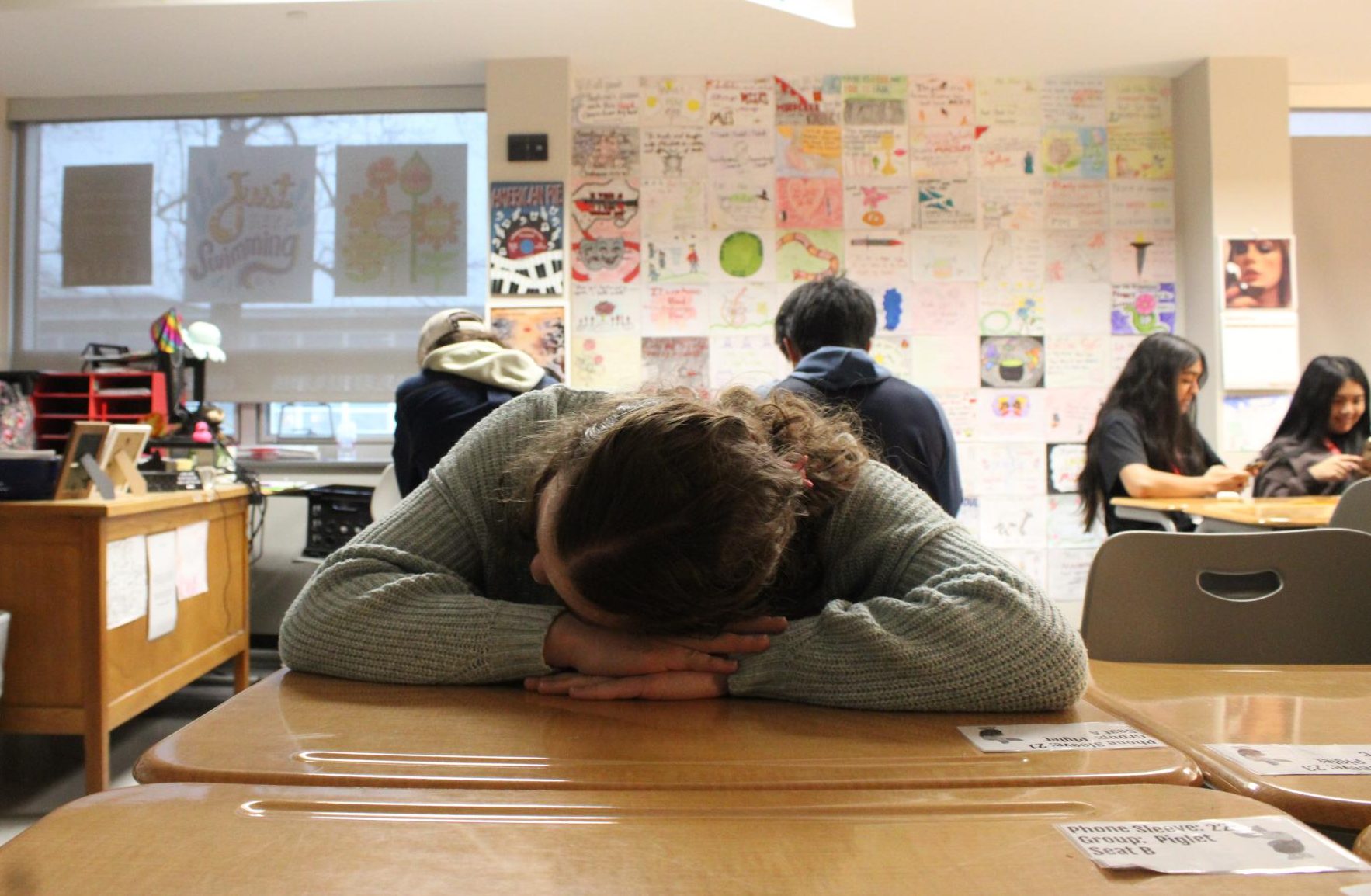
THUD! A student quickly jerks their head up from their desk, rubbing the sore spot on their forehead. Despite the coffee they drank earlier that morning, their eyelids had started to grow heavy as their head began to droop downward. Another late night caught up to them and they dozed off during a lesson. They’re not the only one. According to a CDC study conducted in 2021, more than 80% of the nearly 1,000,000 students enrolled in Indiana public school reported insufficient sleep. Further, according to senior Izabella Martinez, the issue of low energy is a constant one.
“I have low energy like almost all the time; it’s sad,” Martinez said. “I’m tired almost all the time. But I try to stay awake.”
Psychology teacher Elyse Babb further believes the relatively common nature of this phenomenon.
“For this particular age, high schoolers need nine hours of sleep at least,” Babb said. “But I guarantee that very few high schoolers actually get that in order to get that brain development during sleep.”
Biomed teacher Stacey Horn also believes responsibilities unrelated to school are worth mentioning.
“Students are working late hours after school and still come home to homework,” Horn said. “I have had students who help take care of siblings so parents can work at night, which I am sure limits good sleep habits.”
For sophomore Dharneesh Sutharasan, in addition to schoolwork, extracurricular activities push rest onto the back burner.
“In January, I have robotics starting up,” Sutharasan said. “So they’ll push back my sleep. I’ll probably get an hour or two less of sleep, so it cuts down my hours.”
To Babb, it seems that activities and work are often prioritized over sleep.
“I was talking to a student recently about how she worked 12 hours on Black Friday and got home at a very late time,” Babb said. “So I think there are a lot of extracurricular activities, band, sports, that really can be detrimental and hinder the amount of sleep that they get, especially with school starting at 7:45. If you get home at 10, 11, midnight, whatever it may be, there’s just physically not enough time to get the adequate amount of sleep.”
Horn further explains some of the reasons behind this.
“The ideal time for middle and high school to start, according to the American Academy of Pediatrics, is no earlier than 8:30 a.m.,” Horn said. “They state that this aligns with teenagers’ natural circadian rhythms and allows them to get the recommended eight to ten hours of sleep. A later start time helps combat chronic sleep deprivation, which can lead to better academic performance, improved attendance, and fewer health and safety issues.”
According to Dr. Harish Rao, a sleep medicine pediatrician specializing in Pediatric Pulmonology and Sleep Medicine at Riley Hospital, the evidence isn’t just anecdotal.
“There was a study done,” Rao said. “It showed that either 30% or a third of high school students are not getting as much sleep as they need. So generally, with sleep duration, how much a person needs varies depending on age. So anybody that’s 13 and over should get eight to ten hours. And even for that study, they looked at the lower end of the requirement, eight hours. So even at that, not many kids were getting even eight hours.”
These stark numbers are relatively unprecedented, according to Pediatrician Tamara Iorio.
“My educated guess would be that today’s teens get less sleep than in the past because of their lifestyles,” Iorio said. “There were fewer options for sports and activities 50 years ago that would have kept teens busy late in the evening.”
Sutharasan has experienced this fight for attention on a personal level.
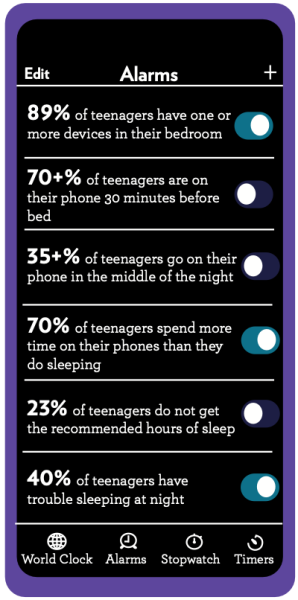
“I feel like usually whatever I’m watching or whatever I’m doing on my phone, usually that keeps my brain going,” Sutharasan said. “So I’m thinking about whatever I was just doing a lot before I go to bed, before I fall asleep.”
Horn points to a potential solution to these modern problems.
“I do believe that schools could start earlier, and students can still get the eight to ten hours of sleep, but they need to go to sleep earlier,” Horn said. “Some of the sleep deprivation simply occurs because students are staying up too late on their phones, working, or are otherwise distracted.”
This is further supported by empirical evidence, according to Rao.
“[With] biological changes that happen in teenagers once they hit puberty or in the adolescent ages, there’s a slight shift in their circadian rhythm, so they generally tend to go to bed later and tend to wake up later,” Rao said. “The American Academy of Pediatrics has recognized this and they actually made recommendations that the start time should be delayed.”
However, school’s universal start time is not the sole perpetrator for sleep deprivation, according to Iorio.
“I think anything that keeps kids away from home in the evenings can have a huge impact on sleep, because part of a healthy sleep schedule is time to wind down in the evening before going to bed,” Iorio said.
Iorio’s patients aren’t the only ones with these weighty responsibilities, according to Rao.
“A lot of patients that I see who have sleep problems, they still need to have a job in the evening or they have a lot of academic responsibilities,” Rao said. “You know, they’re doing sports, they’re doing a job. And also, some schools, to be honest, tend to bypass this as in, ‘Okay, you can’t have a practice late in the afternoon. We’ll do it early in the morning.’ You’re cheating, by the way, like you have a late start in school, but you are asking to come to a swim meet at five in the morning.”
Rao describes why this idea of a late start in school has largely failed to be implemented in Indiana.
“I tried to do a survey. There are only like 400-plus high schools in Indiana, and I got about 50 or 60 responses back,” Rao said. “I was trying to ask them ‘if you don’t have a late start, do you know there’s a need for a late start and what are the barriers?’ I think the problem is that many schools are aware, but they don’t have the resources to make the change, unless it’s written into a law, like what California did. It is challenging for them. They need the support and resources because as you go, one thing I’ve noticed is the more urban you are, I think the schools are able to do them because I think the area where they pick up the kids is probably smaller, but I think more rural areas find it much harder because they probably have a longer route picking up kids from different places. I think that the major barrier is resources to be able to make that change.”
Babb also believes the struggle for transportation can be attributed to many student’s deprivation.
“When thinking about transportation and getting those kids to school, if school starts at a later time and parents work earlier, they’re just not able to transport kids,” Babb said. “Of course, there’s the bus system and everything, but if you have a young kid who’s five, [parents don’t want] them to stay home for that hour or so while they’re at work and waiting for the bus.”
Among these issues are what are called “microsleeps.”
“Microsleeps are episodes of sleep lasting less than 30 seconds and can occur due to lack of sleep,” Horn said. “I have seen people doze off and quickly wake up, and I have seen this in my classes.”
Irregular sleep is linked to worsened focus, and Horn recognizes that her students will miss out on key information when they are tired. Martinez agrees that being tired impacts her academic performance.
“When I don’t get a lot of sleep, I definitely am tired during class,” Martinez said. “So maybe we’re learning something new in a class and I might just not retain the information as well. Sometimes I do get close to falling asleep in class. I try not to though. It definitely makes going through the day difficult, but I try to pair that with coffee and energy drinks.”
Efforts to combat loss of sleep and low energy can often include caffeine and energy drinks. However, according to Iorio, caffeine can negatively affect rest.
“Any caffeine at any time of day can affect sleep because some people metabolize caffeine very slowly,” Iorio said. “ Even people who swear they can have caffeine at dinner and then go to sleep on time are likely not sleeping as well as they would without that.”
Rao strongly cautions against developing a dependency on caffeine.
“Caffeine is detrimental in many ways for sleep because caffeine intake reduces your sleep drive and sometimes caffeine can linger for long hours, because we all break down caffeine at different rates,” Rao said. “Caffeine is not the way to make yourself awake. Of course, you know, caffeine in moderate quantities has its benefits, but you certainly cannot get dependent on energy drinks to help you stay awake. It has its consequences. You end up paying for it.”
However, the alertness caffeine provides can be very appealing. Sutharasan details some of the undesirable effects of sleep deprivation that caffeine serves to eliminate.
“If I get less sleep, I feel less motivated to do stuff, and I just feel lazy and kind of just do stuff,” Sutharasan said. “Even if I do stuff, I’m very slow. I’m not as productive as I usually am.”
Iorio describes several reasons for these effects beyond the surface.
“Stress can adversely affect sleep, so if teens have high levels of stress based on their need to work to support their family financially, if their home is small and does not provide a quiet place to sleep, if they are aware of the financial struggles of their parents or caregivers or if an adult in the home works overnight or long shifts and the student has to help cook or care for siblings [it] could adversely affect teen sleep,” Iorio said.
Horn furthers this idea.
“Students who do not have a regular bed to sleep in, who live in homes with a lot of people, or who have high levels of stress due to poverty could be at higher risk for sleep deprivation,” Horn said.
This also might be due to a lack of education, according to Rao.
“[In a study], the children of families where parents were not well-educated or on a lower socioeconomic status, the parents thought that generally [their children] didn’t need as much sleep,” Rao said. “So their general perception of how much sleep a kid requires is much lower compared to college-educated families or people in a higher socioeconomic status. The CDC data reflected the same thing at a much bigger level. It’s well recognized not just with not getting enough sleep, but even having sleep disorders recognized, like a diagnosis of sleep apnea. There’s a delay in getting a sleep study. There’s a delay in getting health care related to sleep. So there’s widespread disparity in general because for those families, sleep is the last thing on their mind.”
Much like caffeine, sleep itself can serve as a vehicle for refuge, according to Babb.
“I often do think that sleep can be a way for students to cope with stress, especially oversleeping,” Babb said. “And I think sometimes oversleeping or maybe a lack of motivation go hand in hand. I also think that on the other side, a lack of sleep could also be a sign of anxiety, especially when you’re so stressed that you can’t sleep or you can’t relax. Your mind can’t shut off.”
Rao describes how this anxiety compounds upon itself, snowballing into an even bigger problem.
“Somebody with anxiety, most of the time that kind of reflects in difficulty falling asleep,” Rao said. “You know, we have patients that talk about, you know, they can’t shut off their brain, it
makes it harder for them to fall asleep and then get enough sleep. And that lack of sleep then increases their anxiety. It’s kind of a vicious cycle. I think to break the cycle, you need to be able to find ways to be able to wind down, do some relaxing activity, and make sure you’re not using any screen in the last hour of your time.”
Education can also serve to combat this, according to Rao.
“I think education is critical,” Rao said. “Getting [teenagers] to understand why sleep is important and what are the benefits of getting good sleep is really critical. So I think [parents] can’t make going to bed early a punitive thing. So you should be operating in a positive way as in, ‘Okay, let’s have a healthy bedtime routine. We do all this, like a winding down before a bedtime, let’s have a good routine.’”
 Rao also explains how the parents’ duties aren’t limited to just establishing a bedtime routine for their children.
“They need to set a good example themselves,” Rao said. “So I think it takes a village, as in the families and they have good habits and the kids will have a good habit.”
In the meantime, despite her constant tiredness, Martinez, like thousands of other high schoolers, is determined to persevere.
“The less sleep that I have, it definitely discourages motivation, but I still push through things, of course,” Martinez said.