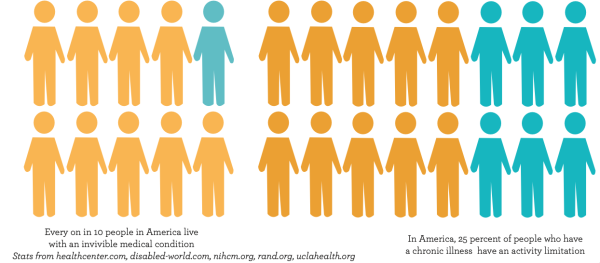
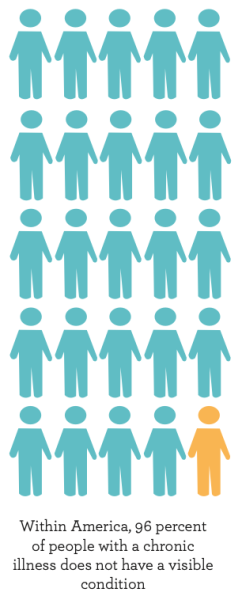
When sophomore Morgan Clark walks through the school halls, there’s no way to tell she’s living with a rare cardiac condition. To most, Clark appears like any other fully healthy, active student. But looks can be deceiving. According to Dr. Christopher Forrest speaking for a Physician’s Weekly article published on Oct. 9, 2025, nearly 50% of three to 17 year olds were listed as having at least one chronic condition. This percentage has risen nearly 6% since 2011. It’s becoming increasingly clear that chronic illness in children is a chronic issue– not just nationwide, but in our own school. Clark describes the specifics of her condition.
“I have what’s called a complete AV node blockage in my heart, which means my ventricles, the top and the bottom parts of my heart, just don’t communicate, which led to very low heart rates,” Clark said.
Clark remembers exactly what her first symptoms were.
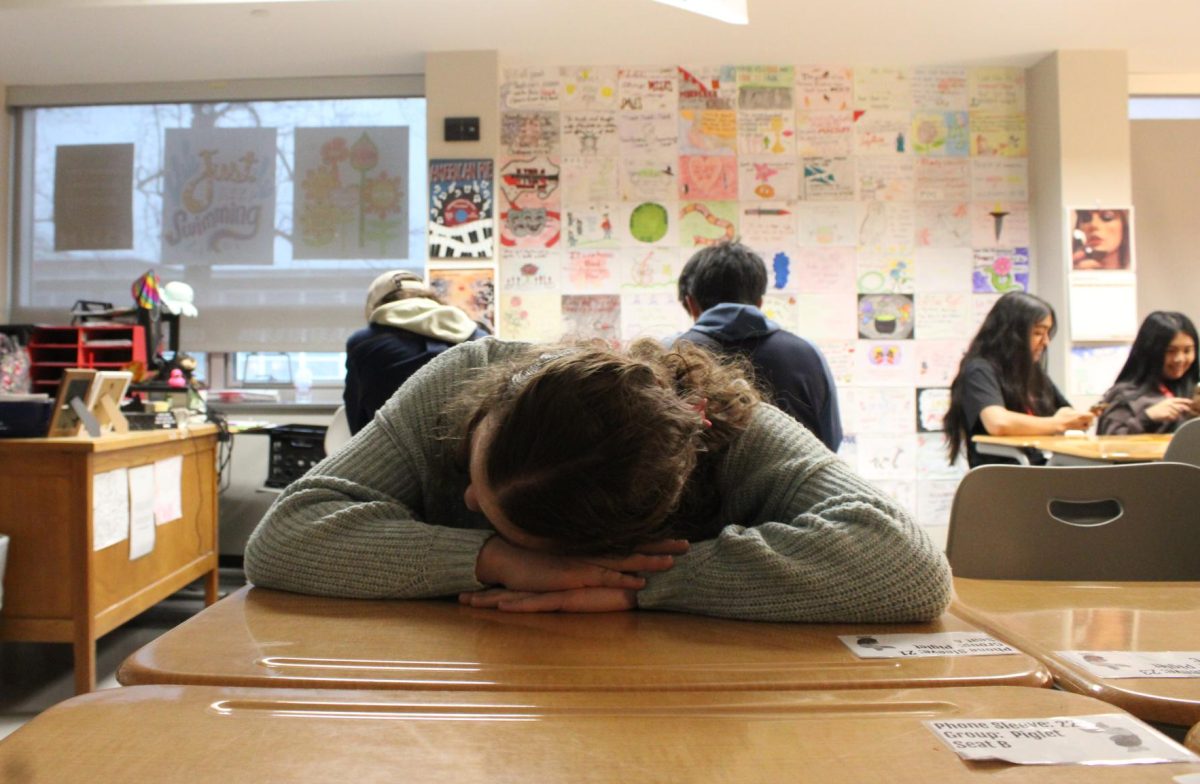
“In sixth grade, I was very tired all the time and I was sleeping in class,” Clark said.
An anonymous student recalls the very first experience they had with the medical treatment they received regarding their Bipolar
disorder.
“Sophomore year during second semester, I went to the mental hospital and they were kind of just like, ‘Clearly, you have something that hasn’t been diagnosed,’” the student said. “So, I sat there for two days in a row while they tried to diagnose me. And they gave me like 30 false ones at first. They thought I had a thyroid disease.”
Social Studies Department Chair Laurie Martin, the mother of a child with epilepsy, describes her daughter’s own experience with treatment.
“When she was in sixth grade, she had what they call a complex partial seizure, which was much more noticeable,” Martin said. “That’s when we took her in to see her doctor who got her in with a neurologist at Peyton Manning Children’s Hospital. That’s when we first got the official diagnosis. She was about 12.”
Martin describes the difficulty in recognizing invisible symptoms.
“We think she had had seizures [before],” Martin said. “They’re called absence seizures and they’re kind of hard to recognize sometimes since she was probably two or three. But we didn’t know they were seizures.”
The challenges continued well after the initial diagnosis.
“Trying to find the right medication was really challenging,” Martin said. “She had allergic reactions to three different medications that were pretty bad. She ended up hospitalized multiple times. We finally had found a medication that was going to work for her, and then her junior year of high school, it stopped working.”
The sudden stoppage had drastic effects, according to Martin.
“She was homebound for most of her junior and all of her senior year of high school, so she missed out on a lot of AP classes that she normally would have taken,” Martin said. “She still participated in cross-country. When she was in middle school and freshman year she was a really strong, probably top ten runner. And then she lost all that through this. Through her epilepsy, she lost a lot in terms of socialization and just getting to go to school.”
Fortunately for Clark, the time spent away has had less extreme implications.
“Usually the way I keep up is if I have a doctor’s appointment or something, I’ll check the work for what I’m supposed to do on the drive there because I have to go to Riley, either in Indy or Carmel, all the time” Clark said. “It’s two hours or three hours, depending on where I’m going there and back, so I have plenty of time to get my schoolwork done.”
In Martin’s experience, getting the chronically ill the care they need can also take a toll on their family members.
“There was a t
ime period where my husband and I would just take turns taking weeks off of work because she couldn’t be left alone,” Martin said. “And she was hospitalized multiple times.”
However, according to Martin, after lots of time and a battery of specialists, Martin’s daughter was able to make significant strides in her recovery processes.
“We found a team of doctors that included not only a neurologist, but she also had a therapist and a psychologist and a psychiatrist,” Martin said. “Through working with all of them, we not only found medication that worked, but found that therapy helped her to deal with having a chronic illness. I think that was kind of key to her recovery.”
Freshman Kyla Magee has also spent significant time in medical facilities for her own condition.
“I’ve definitely spent a lot of time in hospitals, mostly at Riley’s children hospital,” Magee said. “The doctors there are really sweet. It’s not very scary anymore because I’m so used to it, but it’s definitely something I don’t want to have to experience any more.
This experience is unfortunately not unique, according to the student.
“I did spend a while in the mental hospital,” the student said. “That was really rough and scary. But it felt a lot better after the first few days. And then, I’ve spent a lot of time in therapies trying to find something that works. And I have doctor appointments every two weeks.”
Martin further describes the road to recovery for her daughter.
“She’s always had a great neurologist, but putting a team together, I think really made the difference because while her epilepsy was controlled by that point with medication, her emotional stability was not,” Martin said. “I think we were looking at epilepsy as just a medical condition in her brain, and it’s so much more than that. It involved understanding her emotional well-being and giving her the support in terms of different types of doctors that really, I think, were the beginnings of her healing.”
The road to physical recovery often isn’t the only one those with chronic illnesses have to reckon with, according to the student.
“When I got diagnosed, it affected me really badly because I got really scared, because that’s not a thing you want to have,” the student said. “And my biggest fear was always, like, I love kids and I was like, ‘I’m not gonna have kids because I don’t wanna pass that down.’ And over time, I’ve dealt with that idea better. So, I’m kind of proud of how I’ve been dealing with it.”
Martin describes how best to support those dealing with recovery.
“Any kid with any type of chronic illness, they just want to be normal and want people to treat them normal,” Martin said.
Further, a little understanding goes a long way, according to Clark.
“I feel like [fellow students] just don’t really understand what all I have to deal with,” Clark said. “I miss school a lot, [for] check-ups and stuff, because sometimes I have problems with communications between my pacemaker and my heart because something with the programming went weird. People just question why I wasn’t there. When I try to explain it, they don’t understand.”
Most people simply just aren’t aware, according to Clark.
“After I got my medical device put in to help with my blockage, it’s called a pacemaker, a lot of them always question what my scar is,” Clark said. “They ask me if it’s a burn.”
Visibility of her scar can cause others to question Clark’s illness. Instead of understanding, she notices that they often don’t seem to comprehend her circumstances.
“I feel like it’s definitely more visible in the summertime,” Clark said. “When I wear certain shirts, they can see my scar and they start asking me more questions, but it also feels very invisible,because not a lot of people know what it is and so when I try to explain it, they look at me like I’m crazy. I feel like if they would just sit and listen, they’d understand more instead of just me having to give them the shortest answer.”
Clark simply hopes that fellow students could attempt to listen and understand.
“I just wish if I tried to explain it to them, they wouldn’t just look at me like I’m crazy,” Clark said.
While some students don’t understand, others don’t recognize the severity of certain conditions. The student wishes that others wouldn’t misuse medical terms to describe a simple situation.
“I’ve seen so many people who literally say a synonym for Bipolar is crazy or they use it so freely,” the student said. “If they change their mind about something, they’ll go, ‘Oh, I’m so Bipolar.’ It’s really not that simple.”
Even though some people can’t understand the condition that Clark lives with, she has found someone who does.
“I have a pretty shared connection with a lady from work,” Clark said. “She has a pacemaker also, and she likes to share stories, like we can feel when they change our heart rate or something like that. It’s nice to have somebody to talk to that understands what I’m talking about.”
Mental chronic illnesses have different effects than physical chronic illnesses.
“For Bipolar II, what happens is there’s week stretches,” the student said. “You’ll have really extreme highs, and then extreme lows and there’s no middle base really. So, one week you’ll be really hyper. You’ll be bouncing off the walls. And then the next week you’ll completely crash.”
Despite the hardship, the student still finds a positive outlook on their condition.
“I would say that it sounds really scary at first and it’s definitely gonna affect you, but there’s always more to look forward to in life that you’ll be able to get over it,” the student said.
Both knowledge of what’s going on in her own body and the physical treatments have brought Clark a sense of calm.
“It may feel like the end of the world, it might also feel like closure though because you know what’s happening,” Clark said. “I feel like my chronic illness isn’t super severe in the case where it’s untreatable. But having the medical device I have makes me feel a lot better, and I feel a lot more active and I’m not sleeping all the time.”
Despite certain restrictions that treatment brings, Clark still finds reasons for joy in her situation.
“It feels kind of limiting, I’m also very grateful, [but] there’s a lot of things I can’t do that you really don’t think about,” Clark said. “Like, I can’t be around magnetic fields. I can’t stand under power lines because it messes with my device. But I’m very grateful because I’m still here and I’m alive, which is awesome. And there’s a very good team at Riley that is always there for me.”
Magee shares similar, often discrete, restrictions.
“Perfume sets off asthma and [I would tell students] not to spray it constantly,” Magee said, “You can spray it a little bit, but not like an entire bottle every three seconds.”
The anonymous student also finds that their education is impacted by their condition.
“It affects my attendance so bad,” the student said. “I’m never at school. I’ll at least miss one or two times a week.”
Clark has had similar experiences, particularly before the diagnosis.
“I would just crash because I had no other way of getting my energy back other than to sleep,” Clark said. “So it led to worse grades and everything.”
Even after the diagnosis, however, rapid changes don’t necessarily disappear.
“Normal Bipolar changes really quickly, but the one that I have, I have weeks at a time where I’ll be really high and then I’ll be really low,” the student said. “So, that makes it hard to show up to school sometimes and it makes it hard to get all my work done.”
The student also often has issues collaborating with their peers.
“[My condition] makes me a lot quieter and more antisocial,” the student said. “I don’t talk to anybody in all of my classes, and that makes it hard for partner work because I don’t talk.”
The student further elaborates on the social issues that their condition has given rise to.
“Because I know a lot of people, that when they think of it, they don’t want to be around somebody who has [Bipolar],” the student said. “But it doesn’t really affect how we treat people. It’s just how we feel on the inside.”
Similarly, Magee’s experiences have impacted how she interacts with others.
“It’s made me more cautious about people,” Magee said, “Like with secondhand smoke and all that. I have to stay away from strangers and in parking lots, I wear a mask so I don’t have that secondhand smoke getting into my lungs.”
Martin believes that her daughter’s condition has affected their relationship.
“I probably over-parent her a little bit as an adult because I’ve just always had to take care of her,” Martin said. “I’ve had a really hard time letting go of that. I think that has had an effect probably on both of us. But in terms of a family, for the most part, I think it brought us closer together.”
As well as relying on familial relationships, the student advises that trusting your own intuition is an important step of the process.
“It’s your wellbeing,” the student said. “So, whatever you think is true. They can’t put you down or say that you’re not feeling it. They don’t know what’s happening. You need to speak up for yourself.”
The student further discusses the importance of trusting yourself.
“Definitely advocate for yourself,” the student said. “If you’ve heard something or if you’ve seen a diagnosis and you might think, ‘I kind of relate to this. This would make a lot more sense,’ definitely talk to your doctors about it. If they try to push it off, because I know a lot of doctors, their first thing to think of is just like, ‘Oh, you just have anxiety.’ There’s always more to that. You just have to keep pushing.”
Martin further elaborates on the importance of continuously pushing.
“She really didn’t focus on [the hardship], just her resiliency and her strength through everything she went through,” Martin said. “You know, she looked at it as ‘Everything I’m going through is just making me stronger.’”
Like Martin’s daughter, Clark generally maintains a positive view of her experiences.
“I mean, I’m pretty proud of the fact that they caught it early enough because my case was pretty severe to the point where I could have dropped dead while doing sports, but I was still very active and I still pushed through,” Clark said. “I did sports throughout elementary and middle and high school, so I feel like I’m pretty proud of myself for that. I just don’t let it stop me from doing what I like.”