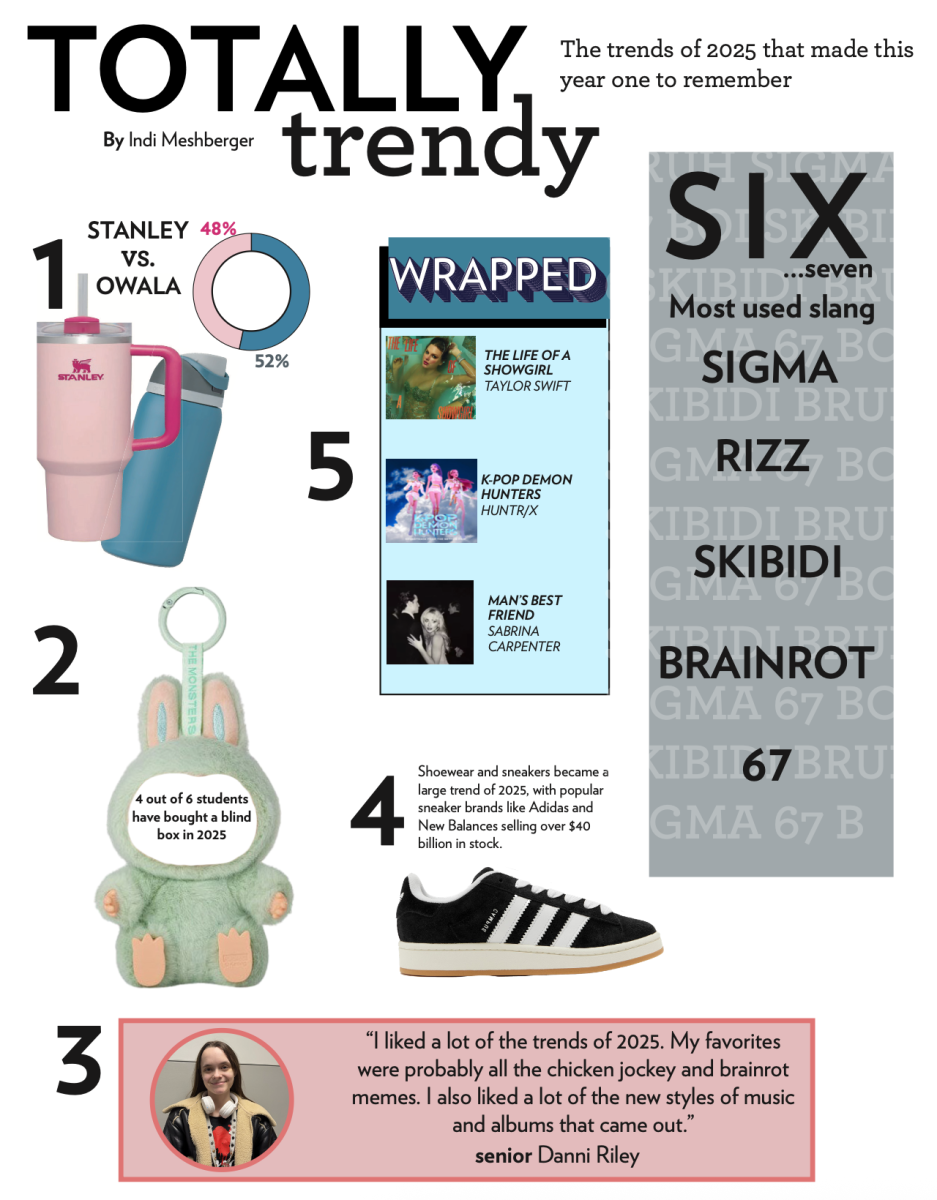
With the widespread availability of seemingly anything and everything, overconsumption as a topic has been becoming more and more apparent across social media, with various influencers being called out for their consumption habits, to trends such as “overconsumption-core” versus “underconsumption-core” adding to the discussion of what is and isn’t overconsumption. With more and more people learning and becoming aware of their own consumption, consumption consciousness has become something that more and more people have become mindful of, as according to meteamedia.org, “overconsumption has become normalized and a growing habit among younger generations, particularly Gen Z and Millennials, driven largely by digital culture, influencer marketing, and algorithm-driven trends.”
According to Merriam-Webster, overconsumption is simply defined as the “overuse of something”. Although overconsumption has been a topic in recent years, and with such a broad definition, it can mean something different from person to person, making it hard to gauge what is and isn’t overconsumption.
With the United States being a capitalist economy, American culture and consumption are deeply intertwined. Think about all of the different options consumers have: from simple everyday products to more niche products, the options available to American consumers are seemingly endless, with more and more options being advertised and magnified by the Internet. But not every purchase is made with overconsumption in mind, as according to earth.org, “up to 73% of Americans report that most of their purchases are impulsive, with 40% of e-commerce driven by, or originating from, impulse buying.”
A huge factor of the concern surrounding overconsumption is the environmental impact and how this affects the overall longevity of Earth as a whole. According to the UAB Institute for Human Rights, if everyone consumed like Americans, “five Earths would be needed to support the global population.” With developments in factories and production, it only meant more and more options would be easily available to consumers, for better or for worse, as globally “material consumption has more than tripled since 1970, causing increasing environmental impacts throughout the life cycle of materials and products” according to the Systems Change Lab.
With the amount of attention that overconsumption has brought to the average person, solutions to the global issue have become something that is thought about by not just normal civilians, but by companies and organizations that aim to protect and raise awareness to the environmental issues caused by overconsumption. Although overconsumption has taken a toll on the Earth, sentientmedia.org said that “unless we make a change, overconsumption will destroy our ecosystems— and possibly humanity’s ability to live within them.”