A question you may find yourself asking while scrolling through TikTtok or Instagram. Is it real? With two main AI platforms, Sora and ChatGPT, the company OpenAI has soared with daily usage. According to a Business Insider article from Oct. 9, ChatGPT has over 700 million active users daily. The newly created Sora AI 2, which launched in late September has reached 4 million downloads by end of October. Sora AI is mainly used for making videos, with hyper realistic “graphics” and quality of video.
“I first discovered it on TikTok. I was just scrolling and I found it,” freshman Davin Gregory said.
Social Media platforms such as Facebook and TikTok allow users to create ad promote AI media.
“It was kind of scary how realistic it was until I noticed some stuff, and then it wasn’t that scary,” Gregory said.
The use of AI has varied, from people wanting to scam people and trick people into thinking things are real, or for fun like junior Thomas Hennessee.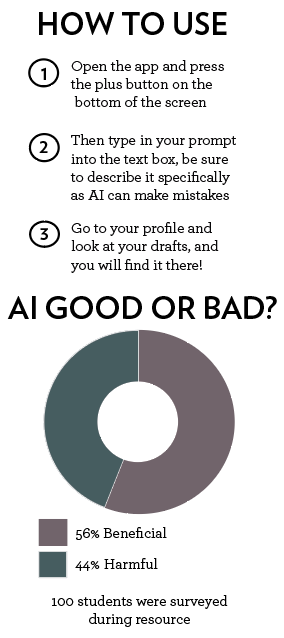
“I make stupid prompts and then send them to my friends,” Hennessee said.
Most of these videos will be of unrealistic situations such as a dog blowing up or a cat flying through the air.
“I think Sora is the most realistic AI I have probably seen,” Hennessee said.
With the ability to deceive people, AI has created a distrust with not only words, but now not easily detected video.
“I think it depends on how you use the AI, if you’re trying to use it to harm anyone, then it’s unethical. If you’re just using it to make videos of your friends and stuff, then it’s fine.” Gregory said.
AI has duped students who have found videos on social media platforms.
“I have seen a few realistic videos where they definitely tricked me,” junior Myles Novresky said. “After a while, I started to realize that they were fake. Especially when you don’t see a water mark.”
With Sora AI, a watermark will float around the border of the video. Some content creators will crop or edit out the water mark, which then makes the hyper realistic videos that you see on social media.
“I believe it’s making people lose their sense of what’s human and what isn’t,” junior Ashton Schwartz said.
In addition to the distrust of AI, the effect it is having on content creators’ social media work is noticed by Schwartz.
“I think that AI is degrading the effort that influencers and editors put into their work that they post on social media,” Schwartz said.
Gregory is worried about how realistic AI can be in the future.
“It can be scary, for sure. I think it will be hard to tell what is real and fake,” Gregory said.