P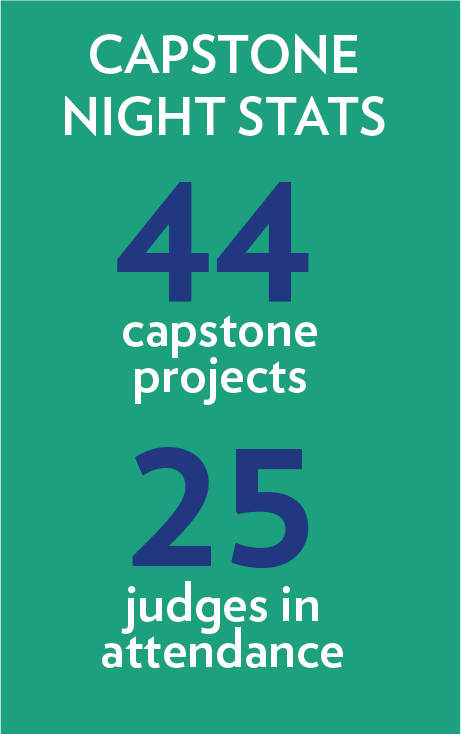 BS. HBS. MI. BI.
Many C4 students are familiar with the Biomedical pathway. The PLTW course collection ranges from the Principles of Biomedical Sciences (PBS) introductory class to the senior-level, specialized Biomedical Innovation (BI) course. Senior Aniket Ghatge, a student of the BI Capstone class, details the course.
“We do a lot of work with real-life challenges and applying what we learn to real-life healthcare scenarios and problems that we might see,” Ghatge said. “It’s really been hands-on rather than just, like, being [in] a basic science class.”
The class requires that each student complete a Capstone project during their senior year. Fellow BI student Marilu Benavente discusses the project.
“BI’s project is different because it’s directly focused with healthcare and it takes the whole year to complete,” Benavente said.
Once all projects are finished, the pathway hosts a Capstone Night, where all students present their projects to judges.
“We invite a lot of community members that we know, families, a lot of people that teach at the school, as well as some CRH members,”
Ghatge said.
Many BI students combine their capstone and senior projects due to similar requirements.
“My Capstone project is my senior project since it follows all the same guidelines; it’s something that generated a positive impact in the community, [it] took me over 40 hours outside of school to execute, and used advice from my mentor,” Benavente said.
BI students present to judges twice, another contrast to standard senior projects. For both Benavente and Ghatge, a project focusing on access to healthcare was instinct.
“My Capstone project revamped English to Spanish translations at Columbus Regional Hospital,” Benavente said. “I created accessible translation cards for nurses to use, and they’re portable— nurses can clip them onto their badge and take them with them.”
More often than not, project ideas have restrictions, especially concerning protections around healthcare.
“Due to a variety of laws, there are different terms and phrases that I legally cannot translate for the hospital,” Benavente said. “ I did my best to research and interview individuals to know what I could translate.”
Ghatge details his project, completed with partner Ishan Jasuja.
“My Capstone project is a short film-slash-documentary on certain communities that struggle with navigating the United States healthcare system, and [the film] addresses those problems throughout that documentary,” Ghatge said.
The film, running 15 to 20 minutes long, was inspired by the work of Ghatge and Jasuja’s mentor.
“We [published] it on YouTube and then did a lot of social media work and also had a formal online meeting where we shared that documentary with community members,” Ghatge said.
Finally, Ghatge reflects on the significance that Capstone Night holds.
“I think Capstone Night is a really memorable experience in terms of how you get to kind of celebrate all the 4 years of hard work that you did in that biomedical pathway,” Ghatge said.